
Gen Z Dating Trends: What Match Group’s Research Reveals About the Future of Connection
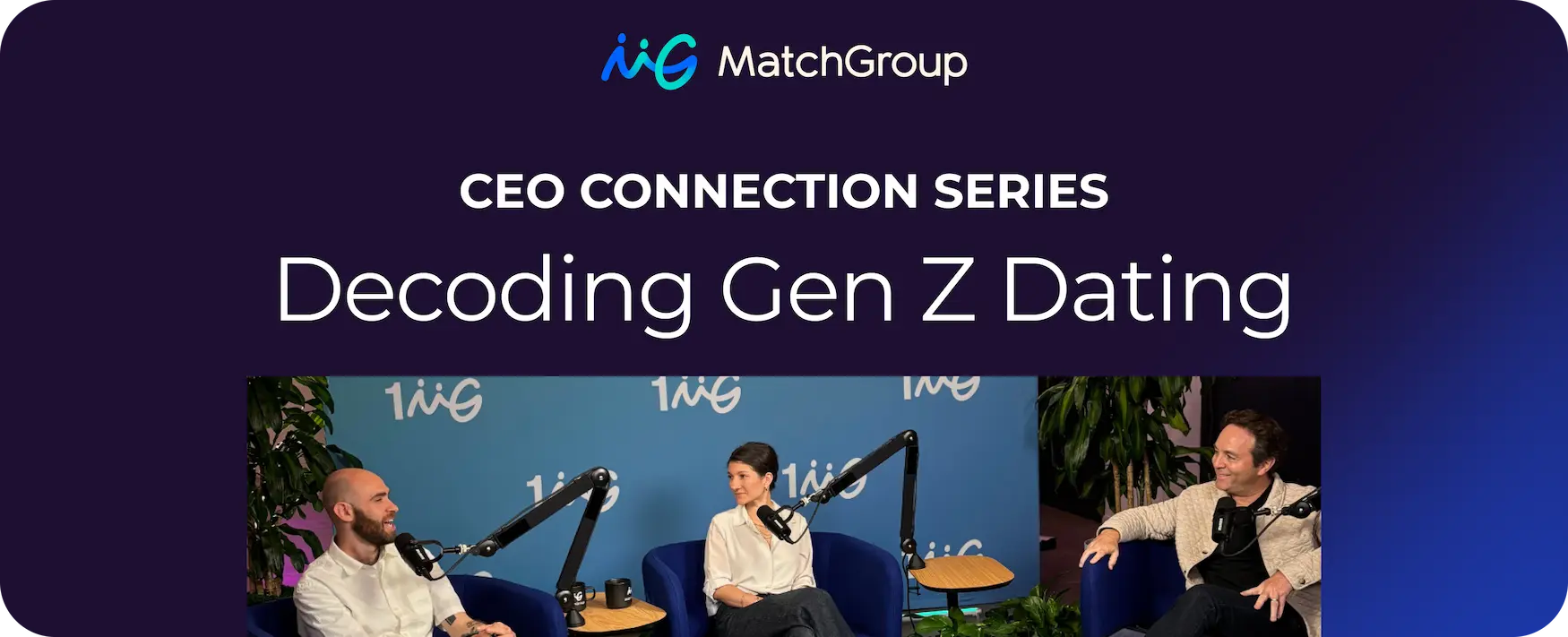
Watch the full CEO Connection Series discussion below.
For years, headlines have questioned whether Gen Z is losing interest in dating, relationships, and traditional paths to connection.
The reality is far more nuanced.
New research from Match Group shows that Gen Z remains highly optimistic about finding love and meaningful relationships. What is changing isn’t the desire for connection—it’s how young people want to get there.
During Match Group’s inaugural CEO Connection Series, CEO Spencer Rascoff joined Emily Dods, Director of Global Brand Strategy at Tinder, and Max Izenberg, Director of Consumer Research at Match Group, to discuss the latest Gen Z dating trends and what they reveal about the future of human connection.
Key Findings From Match Group’s Gen Z Research
- 80% of Gen Z believe they will find true love, compared to 56% of all singles.
- 62% of Gen Z feel more comfortable flirting online than in person, compared to 51% of all singles.
- Relationships remain important, but friendships, community, career growth, and personal development increasingly shape priorities.
- Authenticity and trust are becoming foundational to modern dating experiences.
- Young daters aren’t necessarily looking for more matches or interactions—they’re looking for better ones.
How Match Group Studies Modern Dating
Understanding how dating evolves requires more than a single survey.
Each year, Match Group conducts research across thousands of consumers through surveys, interviews, focus groups, ethnographic research, and ongoing community panels. The company regularly studies dating behaviors and attitudes across more than a dozen countries.
The goal isn’t simply to understand what people do. It’s to understand how people think, feel, and experience connection.
This approach helps Match Group identify deeper shifts in dating behavior and separate short-term trends from long-term changes in how people build relationships.
As Spencer Rascoff noted during the discussion:
“One of the reasons Match Group lost its way for a couple of years was because we didn’t have the network of consumer insights, or it wasn’t well baked into product development and marketing. Today we’re in a much better place on both fronts.”
Understanding Gen Z Dating
Gen Z is often described as a generation that grew up online.=
They are the first generation to come of age in a digital-first world and were heavily shaped by the pandemic, economic uncertainty, political polarization, and rapid social change.
At the same time, Match Group’s research suggests several important characteristics define this generation’s approach to dating and relationships:
Digitally Native
The internet, social platforms, and online communities shape how Gen Z communicates, forms identity, and navigates relationships.
Craving Real-Life Connection
Despite growing up online, Gen Z places significant value on in-person experiences and authentic relationships.
Emotionally Literate
Conversations around mental health, boundaries, self-awareness, and identity are deeply integrated into how Gen Z approaches dating and connection.
Redefining Life Milestones
Traditional milestones still matter, but many young adults are approaching them on their own timelines. This includes relationships, career development, financial independence, and family formation.
Four Expectations Shaping the Future of Dating
Match Group’s research identified four themes consistently influencing how Gen Z approaches connection.
1. Agency: Connection on Their Own Terms
Relationships still matter to Gen Z.
However, relationships increasingly exist alongside other priorities including friendship, identity exploration, community, career growth, and personal development.
Rather than organizing their lives around relationships, many young people want relationships to fit within the broader lives they are building.
- Approximately 1 in 4 adults under 30 list getting into a relationship as a primary goal for the coming year.
- 44% would rather spend time on friends than pursue love.
2. Realness: Authenticity Over Performance
Gen Z wants more authentic and lower-pressure ways to connect.
Growing up online has created new opportunities for connection, but it has also increased concerns about judgment, vulnerability, and social pressure.
- Gen Z is 1.7x more likely than all singles to fear the dating process because of others’ opinions.
- 81% prefer to move slowly when getting to know someone romantically.
The result is a generation seeking experiences that feel more genuine, less performative, and more human.
3. Momentum: Better Experiences, Not More Activity
One of the strongest themes from the discussion was momentum.
Young daters are not necessarily asking for more matches or more conversations. They want greater confidence that their time and effort are leading toward meaningful outcomes.
- 67% of dating app users ages 18–29 say they are looking for a sense of belonging, not simply social interaction.
For Match Group, momentum means helping people move from match to conversation to real-world connection with less friction and more confidence.
4. Trust: The Foundation for Connection
Trust is not separate from dating—it enables dating.
For Gen Z, trust influences whether people feel comfortable sharing information, expressing vulnerability, and engaging authentically.
- Nearly 1 in 3 singles ages 18–29 have concerns about sharing information on dating apps.
- 35% of women ages 18–29 worry about being misled regarding someone’s identity or intentions.
Without trust, meaningful connection becomes significantly harder.
How Match Group Is Evolving
These insights are not simply observations.
They directly influence how Match Group thinks about product development across its portfolio.
Tinder: Lower-Pressure Connection
Tinder continues to focus on discovery, possibility, and lower-pressure pathways to connection.
Recent initiatives include:
- IRL Events
- Double Date
- Astrology Mode
- Enhanced safety features such as “Are You Sure?”
Hinge: Intentional Dating
Hinge serves the same generation through a different lens.
The platform continues to focus on helping people build more intentional relationships through features such as:
- Date Ideas
- Signals
- Match Note
While Tinder and Hinge serve overlapping audiences, each addresses different relationship mindsets and consumer needs.
Looking Ahead: The Next Generation of Daters
Match Group is also studying older Gen Alpha cohorts to better understand how the next generation may approach dating and connection in the future.
Early research suggests that Gen Alpha shares some characteristics with Gen Z, including digital fluency and comfort discussing mental health. At the same time, there are signs that they may be more optimistic about adulthood and more intentional about balancing technology and real-life experiences.
While it’s too early to predict how Gen Alpha will reshape dating, the findings reinforce a broader theme:
The desire for connection remains durable.
What continues to evolve are the expectations around how connection happens and what people want those experiences to feel like.
Watch the Full Discussion
Want to learn more about Gen Z dating trends, the future of human connection, and how Match Group uses consumer research to inform product strategy?
Watch the full CEO Connection Series discussion on demand.
